
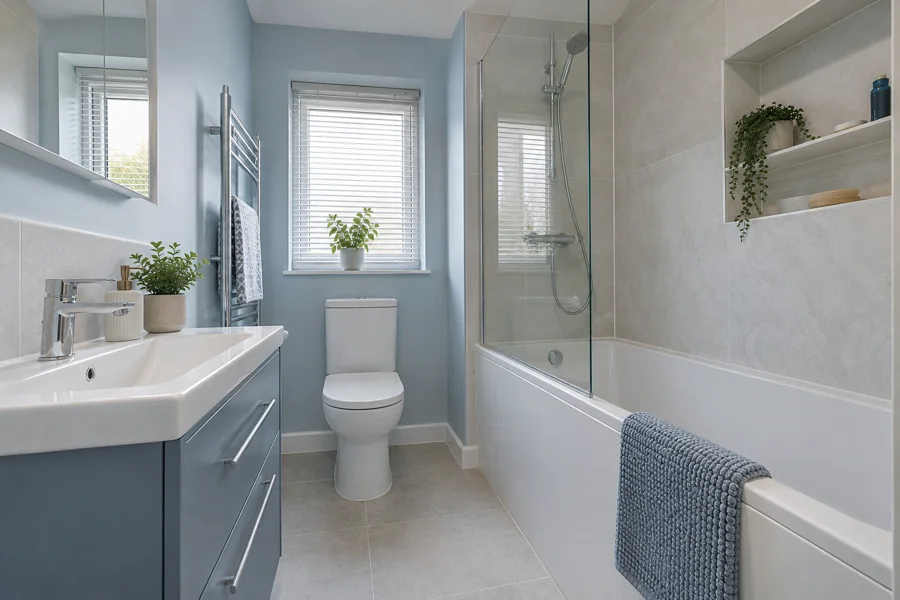
Compare a Complete Wall Finish
Tiles or panels are only part of the finished wall. Preparation, corners, junctions and the details around fittings affect the result. Ask what is proposed for the actual products rather than assume that everything in one material category is installed or cared for in the same way.
Our bathroom installation service considers the finish with the suite and fitting work. Begin with the areas you want renewed and the appearance you prefer. This helps compare installed choices instead of deciding from a material price that leaves the surrounding work unexplained.
Understand the Existing Surface
Ask which old coverings are coming off and what preparation is included for the new finish. A different surface is not a reason to ignore damage beneath it. Tell us about leaks or movement you have noticed, without trying to expose the wall yourself before the visit.
Some conditions become clear only during removal. Ask how a finding would be explained and necessary additional work agreed. This makes the starting condition part of the discussion while keeping it separate from decorative upgrades. A useful proposal should describe known preparation and the process for anything that cannot yet be confirmed.
Imagine the Joints Across the Wall
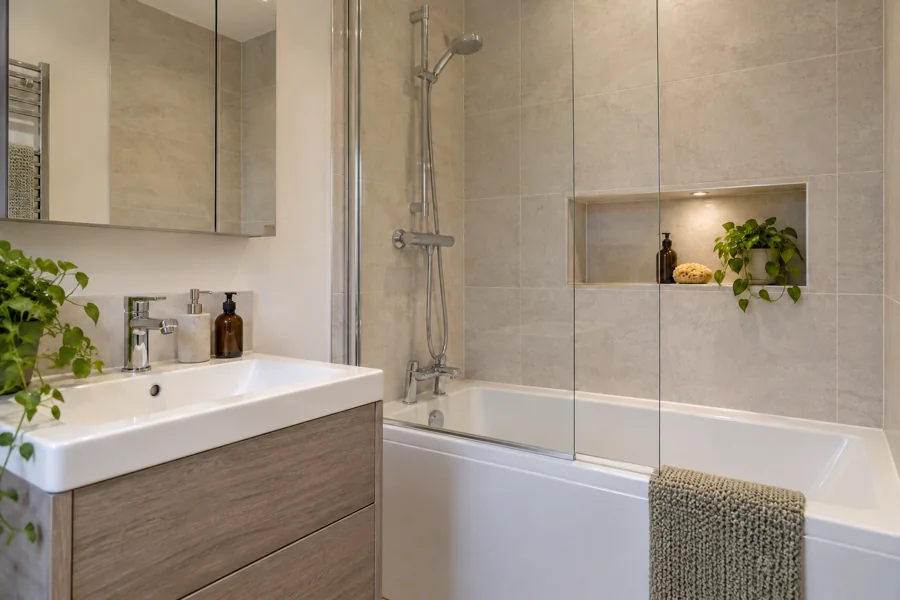
A small sample cannot show where every joint or pattern falls. Look at how the chosen finish will read across a larger area, especially near the bath or shower. Ask how the proposed product sizes and arrangement affect the visible result.
Tiles may make their joint pattern a deliberate feature; larger wall sections still have meeting points and edges to consider. Compare the actual products rather than apply a blanket rule about which option looks simpler. The useful question is whether you like the full arrangement and understand its details, not just the colour of one sample held against a wall.
Check the Care You Will Follow
Ask for the cleaning guidance for the selected surface and related fittings. A product suitable for the old bathroom is not automatically right for the new material. Corners, seals and edges remain part of ordinary care even where the main surface looks simple.
Consider how you will reach the walls around the suite and screen. A narrow inaccessible gap can matter more to your routine than a difference between two samples. Choose a finish whose care you understand and are comfortable following, rather than assume one category needs no attention or that every material can be treated in the same way.
Ask About a Later Repair
Keep the selected product information and ask whether spare material would be useful for the actual finish. Discuss how a damaged area might be approached rather than assume it can always be replaced without affecting the surroundings. The answer depends on the products and installation.
This is a different decision from routine cleaning. It concerns what information and materials may help if work is needed later. Keep useful names or order details with the bathroom records. You do not need to plan a repair that has not happened, but understanding the proposed finish beyond its first appearance can help compare its practical suitability.
Compare the Same Extent of Work
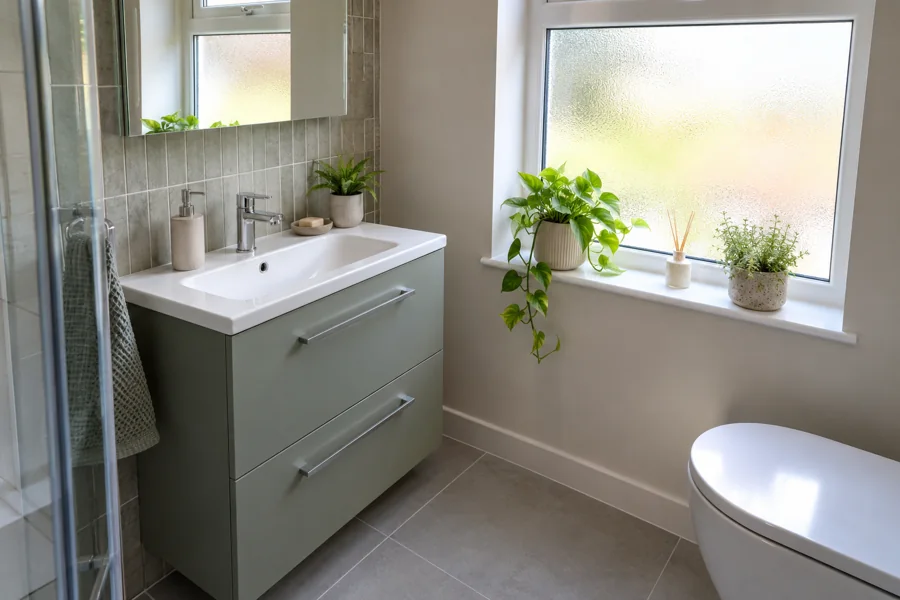
One quote may cover only the shower walls while another includes a larger part of the room. Mark the areas you want finished, including behind changed furniture and around windows. Ask whether removal, preparation and final edges are included before comparing the totals.
The itemised bathroom quotation guide helps make those differences clear. Read the wall choice alongside the floor and suite rather than treat it as an isolated purchase. A useful price comparison describes the same completed areas, with significant alternatives identified instead of allowing an unexplained difference in coverage to decide the material.
Look at Samples in the Room
View the wall sample with the floor, furniture and tap finish you are considering. Light, texture and shine can change the way a colour feels. A strong pattern may be a feature you enjoy, but it needs comparing at a useful scale with the rest of the room.
The bathroom design checks guide explains why separate attractive products do not automatically form a coordinated room. Keep the final product description with the quotation. If a substitute is proposed later, review its appearance and fitting needs rather than assume a similar name means the same finish.
Settle Accessories Before the Finish
Discuss the intended positions of shelves, rails, mirrors and screens before wall work is complete. Their fixing needs belong with the selected surface and the construction behind it. A decorative position should not be treated as certain without checking whether it suits the actual room.
If an accessory will be supplied separately, make its details available for that discussion. Avoid choosing a shelf only after the walls are finished and assuming it can go anywhere. This does not mean filling every space in advance; it means identifying the useful features you want so they can be considered with the installation rather than become an avoidable late alteration.
Review Windows, Corners and Recesses
A bathroom is more than a set of plain wall areas. Windows and recesses create edges that need a clear finish. Ask how the selected material meets these shapes, including any proposed trims, so their appearance is considered with the main sample.
A shower niche also needs a suitable construction and planned junctions, not simply an outline on a design picture. Check the actual shape of the room with the quotation before agreeing. These details help turn the material choice into a complete fitted result, with the corners and openings explained rather than left outside a comparison based only on total wall area.
Discuss Your Bathroom Finish
Show us the look you prefer and the Coatbridge room you want to change. We can discuss suitable finishes alongside the products, preparation and fitting work.